Mindfulness & stress management
Stress isn't the enemy. Stress that never switches off is.
Stress is a survival system. When you face a threat, your body releases adrenaline and cortisol, sharpens your focus and mobilises energy. That's useful for a deadline, a presentation or a hard workout. The problem starts when the system never switches off.
Acute vs chronic stress
Short bursts of stress followed by recovery make you more resilient. That's the principle behind exercise, sauna and cold exposure.
Chronic stress is different. Months of work pressure, money worries, caring for someone, or a relationship in trouble keep the stress response running. Over time it raises blood pressure, disrupts sleep, drives cravings, weakens immunity and is linked with faster biological ageing.
You can't remove every stressor. You can build recovery into your day.
What works
Breathing
Slow breathing is the fastest way to shift your nervous system out of fight-or-flight. Two techniques worth learning:
- The physiological sigh. A double inhale through the nose, then a long, slow exhale through the mouth. One to three rounds. In a 2023 trial, five minutes a day of this "cyclic sighing" improved mood more than the same time spent on mindfulness meditation.
- Slow breathing. Around six breaths a minute, breathing in for four seconds and out for six, for five minutes.
Meditation and mindfulness
Reviews of randomised trials find that mindfulness programmes have moderate effects on anxiety, depression and stress. The benefit comes from regular practice: ten minutes a day beats an hour once a week. An app is a fine way to start.
Time in nature
A study of around 20,000 people in England found that those who spent at least 120 minutes a week in nature were significantly more likely to report good health and wellbeing. It didn't matter whether that came in one long visit or several short ones.
Writing
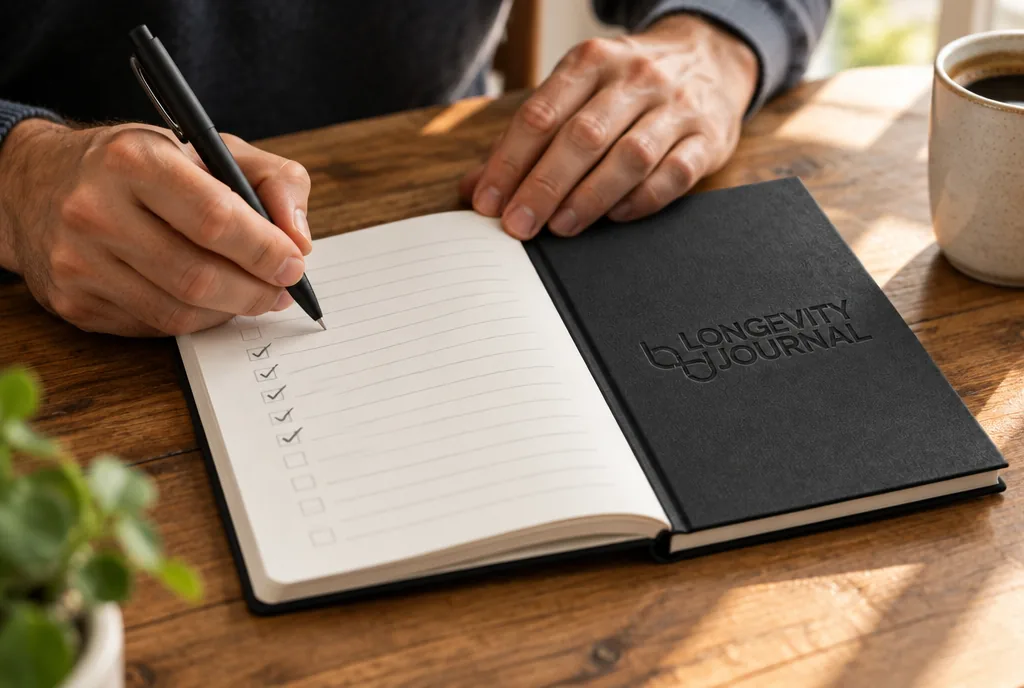
Expressive writing about stressful experiences has improved mood, and in some trials physical health, in controlled studies. The journal's morning page does a smaller version of this every day: gratitude, intentions, and getting what's in your head onto paper.
Movement
Exercise is one of the most effective treatments for mild to moderate depression and anxiety, comparable in some studies to therapy and medication.
Boundaries
Some stress is structural, and no technique fixes it. A daily phone-free hour, a defined end to the working day, or saying no to one recurring commitment can do more than any breathing exercise.
Signs it's more than stress
Persistent low mood, losing interest in things you used to enjoy, anxiety that affects your daily life, or thoughts of harming yourself are not stress-management problems. Please talk to your GP or a mental health professional. Effective treatment exists, and asking for help is a strength.
Key numbers
5 minutes: daily breathing practice that improved mood in a trial.
120 minutes: weekly time in nature linked with better wellbeing.
~6 breaths a minute: a calming breathing rate.
This week
- Try three physiological sighs the next time you feel tense.
- Spend 20 minutes outdoors in green space on at least three days.
- Choose one daily "off" time: a phone-free hour, or a hard stop to work.
In the journal
The morning page is a short stress practice in disguise: gratitude, three small things that would make today great, and one person to reach out to.
Sources: Balban et al., Cell Reports Medicine 2023 · Goyal et al., JAMA Internal Medicine 2014 · White et al., Scientific Reports 2019 · Singh et al., British Journal of Sports Medicine 2023
 Put this chapter into practice — The Longevity Journal