
Twenty-five health tips is twenty-three too many.
Every good coach eventually publishes a list of everything they know. The list is usually right. The order is what's missing.
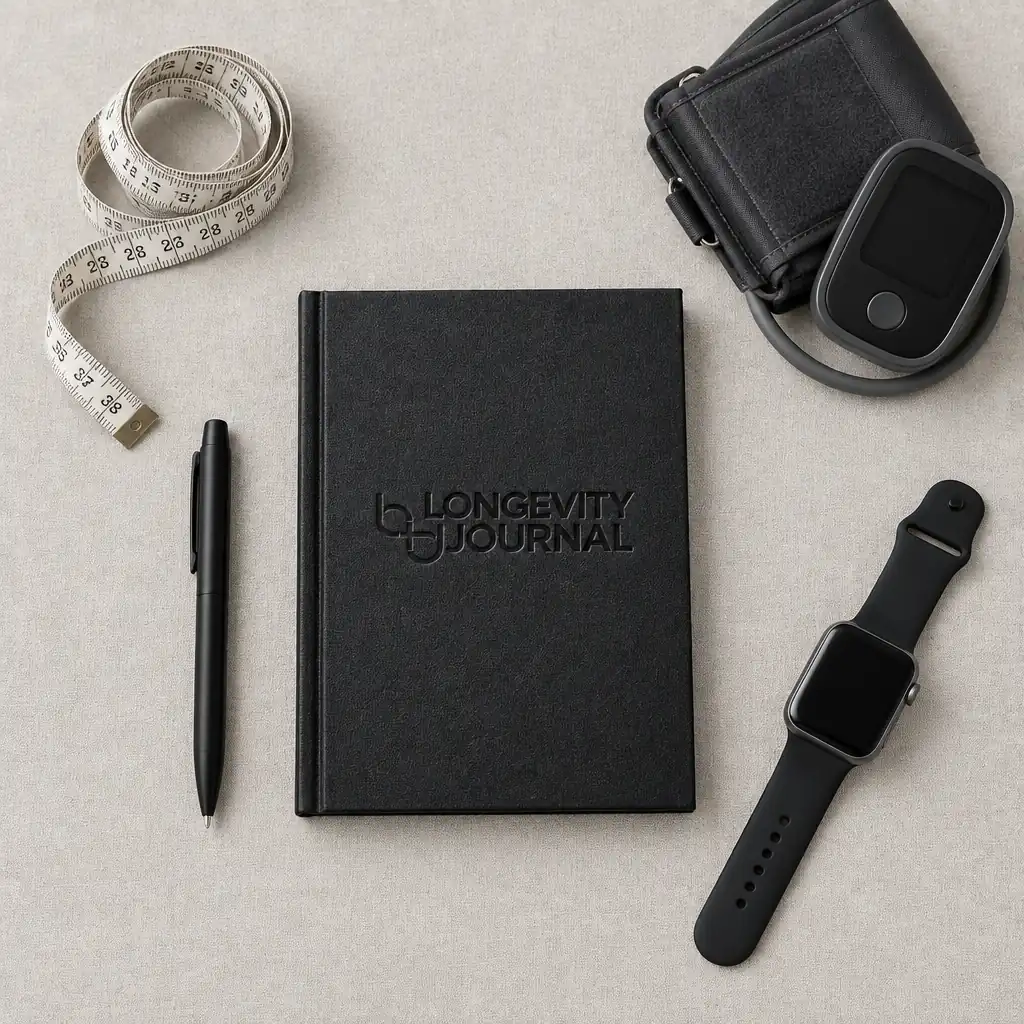
You've seen the list. A coach with twenty years of clients writes down everything they wish they'd known at twenty-six: walk after meals, floss, eat protein first, get morning sunlight, check your fasting insulin, buy an air filter, breathe through your nose, do zone 2 twice a week. Twenty-five items. All of it defensible. Most of it true.
And then, at the bottom, the honest line: don't try to do all of this, pick one or two.
That last line is the whole problem. The list gives you twenty-five doors and no map. Which one or two? The coach can't tell you, because he doesn't know where you're starting. So most people pick the interesting ones, the air filter and the psyllium husk, and leave the boring ones, the waist measurement and the walk, which are the ones that would have changed their life.
Here's the map.
The rule before the list
You are in the lowest tier that still has a red box. Fix that tier. Everything above it is a distraction until you do, however well-evidenced it is.
That's it. Now the twenty-five tips sort themselves.
Level 1: the tips that are actually the foundation
These cost nothing, need no lab, and are where almost everyone should start. If your waist is more than half your height, your blood pressure is unknown, or your sleep is irregular, this is your whole list.
Measure your waist, not your weight. The scale can't tell you where the fat is. A tape at the navel can, and visceral fat is the kind that matters. Under half your height is the line. It's one of the first boxes on page 7 of the journal for a reason.
Walk after meals. Ten or fifteen minutes, casual pace. It flattens the glucose spike, it's the easiest step count you'll ever earn, and it works from day one.
Sunlight within thirty minutes of waking. Five to ten minutes outdoors. It sets the clock that decides how tired you are at 11pm.
Stop eating three hours before bed. Digestion and repair compete for the same night. Give repair the night.
A dark room and no bright light after dark. Cheap, boring, and the difference between sleep and lying down.
Breathe through your nose, especially at night. It's a Level 1 sleep-quality lever that most people never pull.
Eat slowly. Chew, put the fork down, stop at 80%. The cheapest appetite control there is.
That's seven of the twenty-five. If any of your Level 1 boxes are red, they're the only seven you need for the next month.
Level 2: the tips that need a number
Once the foundation is green, the next tier is about knowing what's happening inside, and building the two capacities that predict how long you stay capable: cardiovascular fitness and strength.
Ask for the markers your GP doesn't offer. Fasting insulin, HbA1c, and the triglyceride-to-HDL ratio between them catch insulin resistance years before glucose alone does. Add ApoB. These are the Level 2 panel; standard "normal" ranges will call you fine long after longevity clinicians would want a word.
Zone 2, twice a week. A pace where you can talk but couldn't sing. Thirty to forty-five minutes. It's the single most effective, least exciting thing on any list.
Strength training, and eat protein first. Muscle is where glucose goes when it leaves your blood; training it takes load off your liver. Front-loading protein in a meal flattens the response to everything after it. Make your last meal the biggest protein meal, because repair happens overnight.
Interval walking. Three minutes brisk, three minutes easy, for half an hour. A respectable VO2 max stimulus for people who don't want to run.
Supersets. Pair two exercises for different muscles, skip the rest between them, halve the session. Same work, half the time. This is how a training week fits into a life.
Level 3: the tips that are true and can wait
Everything here is worth doing. None of it should come before the tiers below are green, because none of it moves the needle as far as those do, and some of it costs money you'd rather spend on the Level 2 panel.
Psyllium before your worst meal. A nutrient panel for vitamin D, omega-3 index and magnesium, and supplementing to whatever's low. A light therapy lamp for northern winters. A HEPA filter in the rooms you live in. A walking treadmill under the desk. The mobility drills for hips, ankles and spine that keep you moving well into your seventies. The McGill big three for a stubborn back. Flossing, which turns out to be an inflammation habit as much as a dental one.
And, from the bottom of the list, the one that isn't a hack at all: speak to your body the way you'd speak to someone you're responsible for. People who do make better choices regardless of what the scale says.
What to actually do with this
Take the Level 1 tests. Tape measure, a cheap cuff, a week of noticing your sleep and steps. If everything's green, take the Level 2 panel and the fitness tests. If those are green too, you've earned the interesting tier.
Then pick one red box, not two, and give it thirty days with nothing else changed. That's how twenty-five tips become one action, and one action becomes a number that moves.
The journal prints the three tiers with the targets, gives you a page to record which boxes are red, and puts your one red box on every evening page until it isn't. The coach's list was right. The order was the missing piece.
Prompted by a "cheat codes" list from coach Dan Go; the sorting into tiers, and the argument for it, are ours.
Related chapters in the course
Keep all eight in play
A4, wire-bound, 90 days. Five minutes in the morning, five at night.
Get the journal, €39.99